
Smith machines for guided strength training
A Smith machine uses a bar attached to rails, guiding its movement along a fixed path. Depending on the model and setup, you can perform squats, bench presses and shoulder presses. The guided bar reduces the need to balance a free barbell, while exercise position, safety-stop settings and load selection remain important.
Explore standalone Smith machines and all-in-one systems that combine a Smith bar with rack supports and cable stations. Choose a model suited to your exercises, available space and intended use at home, in a personal-training studio or in a professional gym.
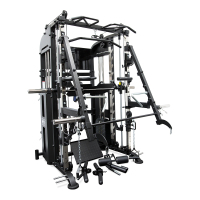
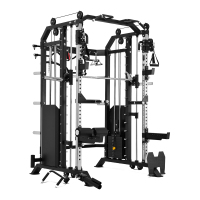
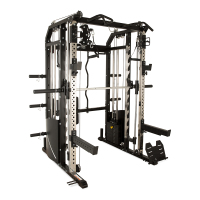
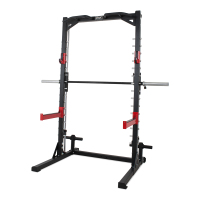
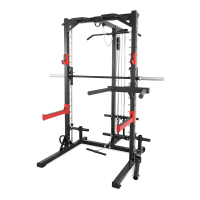

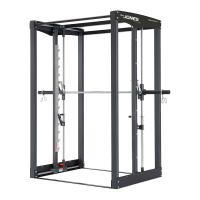

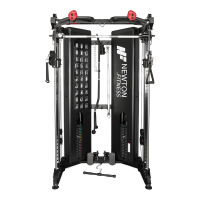
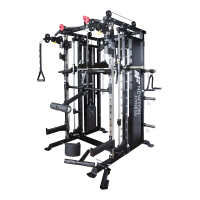

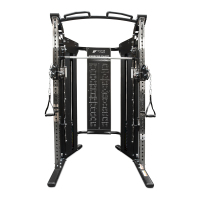
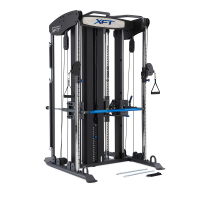
What is a Smith machine?
A Smith machine has a bar attached to a guide system, usually with vertical or fixed-angle rails. Racking hooks let you secure the bar at different heights, while adjustable safety stops, where fitted, limit its downward travel. Check how these mechanisms work and set them according to the manufacturer’s instructions. Guidance does not make every exercise or load suitable for every user.
Smith machine or power rack?
A power rack supports training with a free barbell whose path you control. A Smith machine determines the bar’s path, so your stance and bench position need to suit the rails and the exercise. Neither system automatically makes solo training safe. Compare the available safety equipment, movement space and exercises, and use assistance when needed.
All-in-one Smith racks
Some systems combine a Smith machine, free-barbell rack and functional trainer. This allows guided presses, cable exercises and free-weight training in one setup, depending on the equipment provided. Check which J-hooks, safety supports, handles and other accessories are included, and allow room for each function rather than considering the frame dimensions alone.
Plate loading and weight stacks
Check the resistance system for each function separately. A combination machine may have a plate-loaded Smith bar and weight stacks for its cables; the presence of a stack does not mean it loads the Smith bar. For Olympic weight plates (50 mm), the 50 mm refers to the plate hole diameter. Verify plate compatibility, maximum loading and whether weights are included. Also compare the Smith bar’s stated starting resistance, any counterbalance and the cable pulley ratio.
What should you check when choosing?
Compare rail angle, bar travel, starting resistance, racking positions, safety stops and load limits for each part of the machine. Check floor space, ceiling height, bench clearance and room to load plates. Extensions such as cable attachments or lever arms must be compatible with the exact model. For professional use, choose equipment rated for that setting and follow the installation and maintenance instructions.
This category is part of our wider range of strength stations and strength equipment for home gyms and professional training spaces.
