
Kettlebells for strength and conditioning
A kettlebell lets you train strength, fitness, stability and coordination with one compact weight. Choose from cast iron, neoprene and competition kettlebells from 4 to 48 kg, individual weights, sets and adjustable models for home or commercial use.
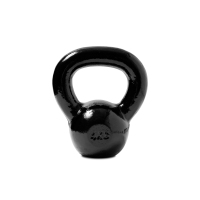
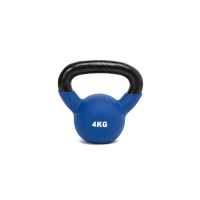
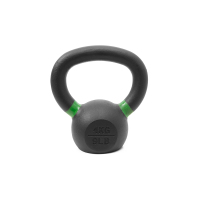
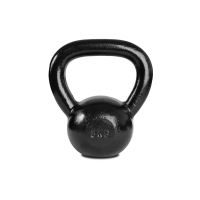










What is a kettlebell?
A kettlebell is a training weight with a handle above its weighted body. This places the centre of mass below your hand, so it moves differently from a traditional dumbbell. You can use it for controlled strength exercises as well as dynamic movements that combine strength, balance and cardiovascular fitness.
What types of kettlebell are available?
The main types are cast iron, neoprene-coated and competition kettlebells. Sets and adjustable models are also available. The best choice depends on your training goals, experience, available space and training surface.
Cast iron kettlebells
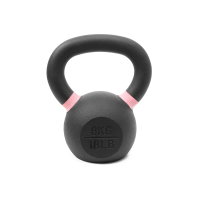
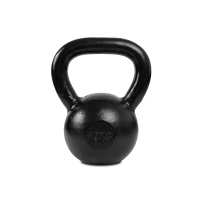
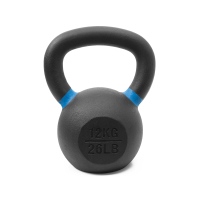
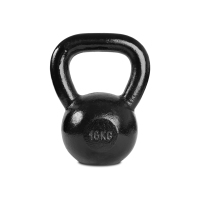
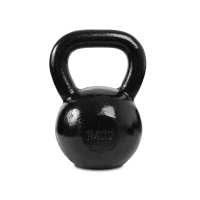
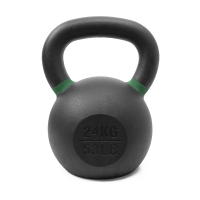
Cast iron kettlebells are robust, versatile weights for swings, squats, deadlifts and presses. Traditional models generally get larger as the weight increases. They suit both home gyms and intensive use in commercial training spaces.
Neoprene kettlebells
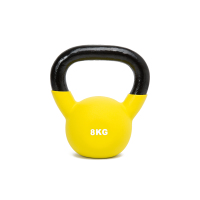
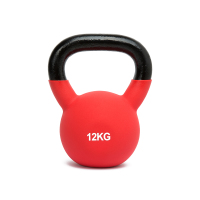
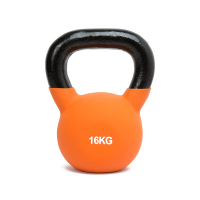
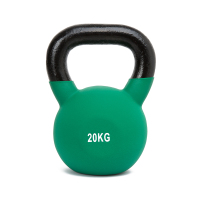
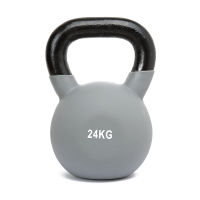
Neoprene kettlebells have a cast iron core with a soft coating around the body. This reduces direct contact between the metal and the floor and can feel more comfortable when the weight rests against your arm. They are a practical option for home workouts, group classes and fitness studios.
Competition kettlebells
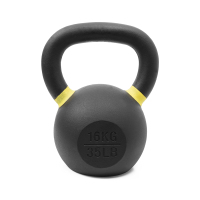
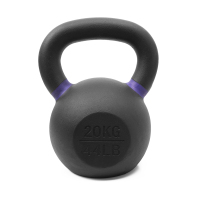
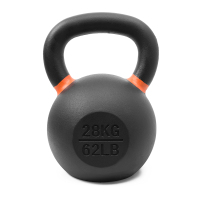
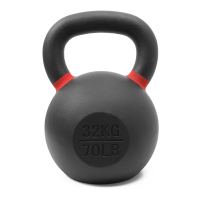
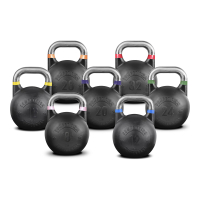
Competition kettlebells keep the same external dimensions across different weights within a range. This helps maintain a consistent grip position, resting position and movement path as you increase the load. They are designed for kettlebell sport but also suit technique-focused strength training and intensive workouts.
Which kettlebell is right for me?
Choose cast iron if you want a sturdy, versatile weight for general strength training. A neoprene model helps reduce direct metal contact with the floor, although the coating does not replace suitable floor protection. Competition kettlebells suit training with consistent dimensions and technique. An adjustable model is especially useful if you want several weight levels but have limited storage space.
What kettlebell weight do I need?
The right weight depends on your experience, strength and chosen exercise. Technical movements and overhead exercises usually call for a lighter load than swings, squats and deadlifts. Start with a weight you can control throughout the movement and increase it only while maintaining good posture and technique. Two or more weight levels are often useful for a varied programme.
Which exercises can you do with kettlebells?
Popular exercises include swings, goblet squats, deadlifts, lunges, rows and shoulder presses. Experienced users also perform cleans, snatches, jerks and Turkish get-ups. Combining different exercises lets you create a full-body strength and conditioning workout.
Kettlebell or dumbbell?
A dumbbell is well suited to controlled pushing, pulling and isolation exercises. A kettlebell's offset centre of mass also makes it useful for swinging and explosive movements. Both can complement each other: dumbbells for targeted strength work and kettlebells for dynamic full-body exercises.
Individual kettlebells, sets and adjustable models
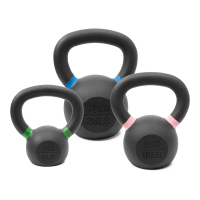
An individual kettlebell lets you choose the exact weight you need. A set provides different loads for several exercises or users. An adjustable kettlebell combines multiple weight levels in one model to save space. Check the available weight range and make sure the selected weight is securely locked before each exercise.
Training safely and storing kettlebells
Allow plenty of clear space for swings and other dynamic exercises, and preferably use suitable fitness flooring. Put kettlebells down under control and only drop them if both the product and the surface are designed for it. A kettlebell storage rack offers an organised storage solution for multiple weights.
